By Helen Kingstone
After attending the G. W. M. Reynolds panel at the British Association for Victorian Studies conference in September 2022, I decided to take up the panellists’ call for us to include Reynolds in our teaching. I incorporated some excerpts from The Mysteries of London in an MA module on Victorian London – one of the core modules of the MA in Victorian Literature, Art and Culture, in the Centre for Victorian Studies at Royal Holloway, University of London.
I added the Reynolds content into a pre-existing seminar focused on Henry Mayhew’s London Labour and the London Poor, so that the students could compare these two very different but contemporaneous approaches to representing the London streets.
I set the students to read the opening few chapters of The Mysteries of London (along with chapters from Mayhew), and the main questions I asked them to consider were:
- What does The Mysteries of London remind you of – how would you classify the genre?
- What does it have in common with Mayhew’s work, and what’s different – and why?
We had a good discussion both of the text’s content and of its publication format and success.
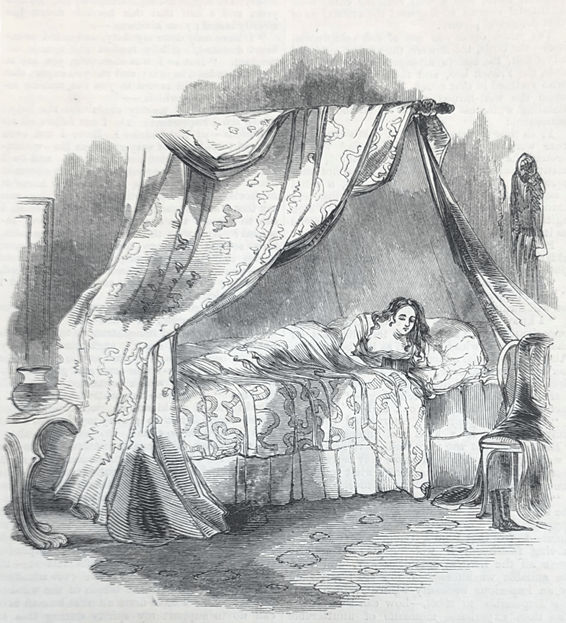
Two students went on to write on Reynolds in their end-of-module essays, both making comparisons across Victorian and neo-Victorian texts. Cecilia Ramous Fabj wrote an analysis of three female characters who use dress to perform alternative identities, considering Lady Dedlock’s temporary disguise as a lady’s maid in Bleak House, and bringing it into comparison with cross-dressing by Eliza Sydney in The Mysteries of London and Nancy Astley in Sarah Waters’s Tipping the Velvet. Oscar Lam took a creative approach in stepping beyond the module’s set texts to compare The Mysteries of London to a neo-Victorian novel, Dung Ka-Cheung’s Atlas (about Victorian Hong Kong) to consider how each text represents the fragmentary nature of urban modernity.
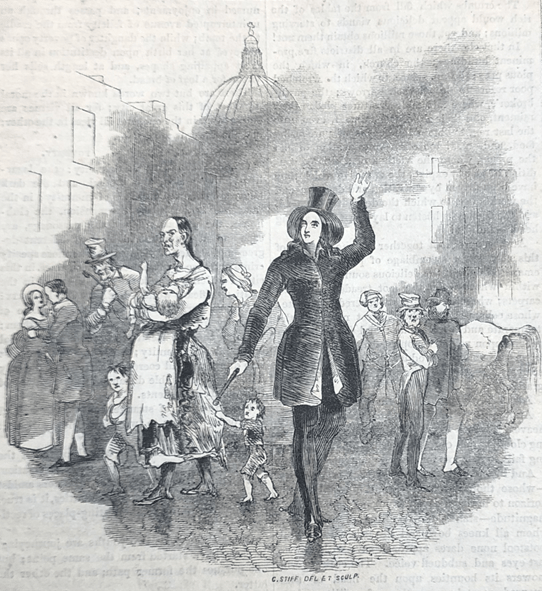
These initial examples show what great food for thought and potential further research lies within the once hugely popular pages of Reynolds’s long-running serial.
Helen Kingstone is a Lecturer in Nineteenth-Century Literature and Visual Culture at Royal Holloway, University of London.
 G. W. M. Reynolds Society